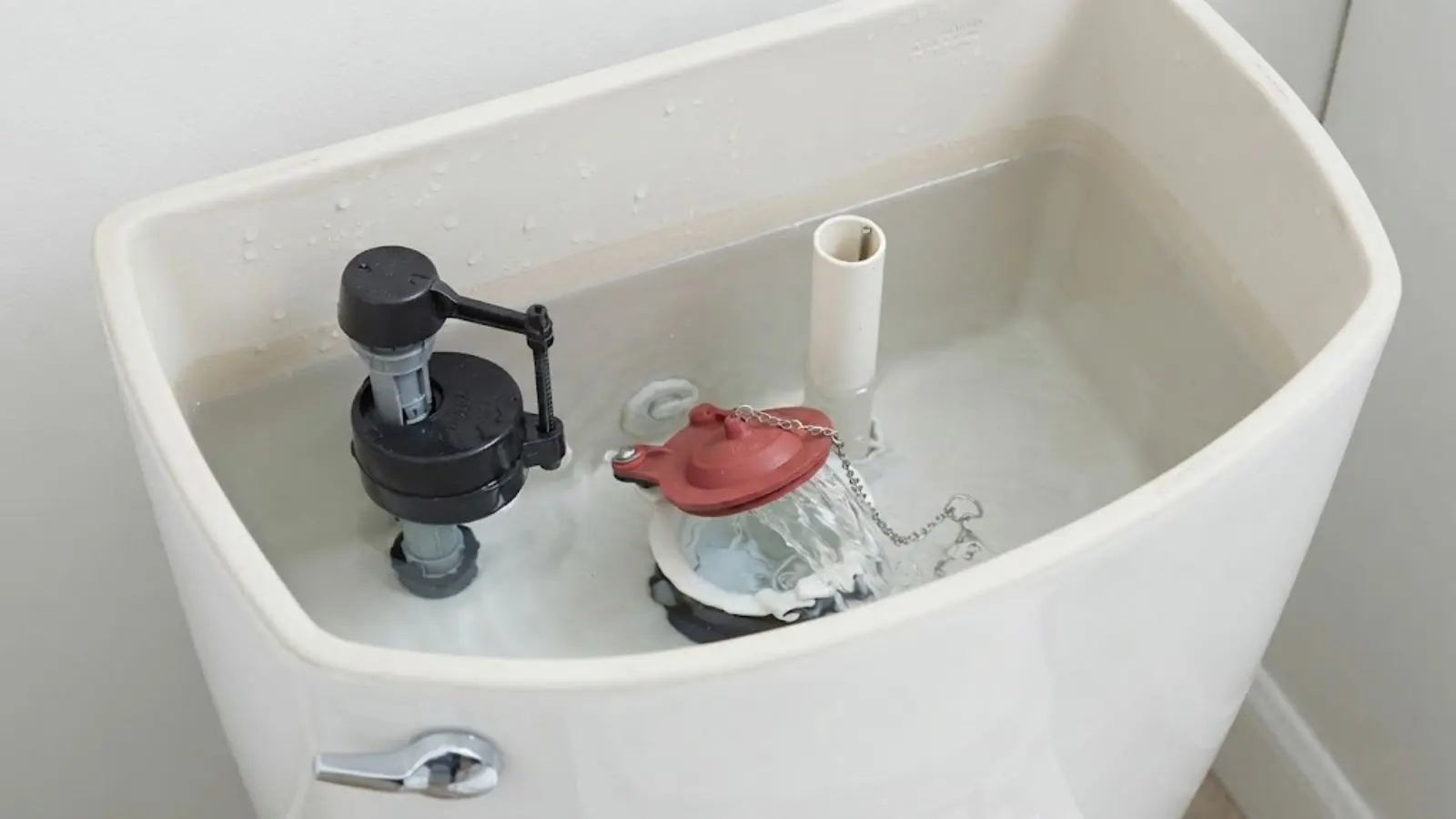
What you need before you start
Gather a new toilet, a new wax ring or a wax free seal, closet bolts, a new supply line, a putty knife, an adjustable wrench, a level, a sponge and a bucket. Buy a toilet with the same rough in as the old one. The rough in is the distance from the wall to the center of the drain, and 12 inches is the most common.
Measure it before you shop. A toilet that does not match the rough in will sit too close to the wall or leave a gap behind it, and the only cure is returning the toilet.
Removing the old toilet
Take your time here, since the old toilet is heavier than it looks.
Shut off the water
Turn the valve at the wall clockwise, flush and hold the handle until the tank empties.
Disconnect the line
Unscrew the supply line from the valve and soak up the water left in the tank with a sponge.
Unbolt and lift
Remove the caps and nuts on the base, rock the toilet gently to break the seal and lift it straight up.
Clean the flange
Scrape off the old wax, then stuff a rag in the drain to block sewer gas while you work.
Setting the new toilet
The order below keeps the seal from moving after you set it.
Check the flange
The flange should sit level with or slightly above the finished floor and be solid, with no cracks.
Add new bolts and the seal
Slide new closet bolts into the flange slots and press the new wax ring onto the flange or the toilet horn.
Lower the toilet
Line up the holes with the bolts and press straight down with your weight. Do not twist or rock it afterward.
Tighten evenly
Alternate between the two nuts, a little at a time, until the toilet is firm. Stop before the porcelain strains.
Mistakes that cause leaks
Most leaks trace to one of these:
- Reusing an old wax ring, which has taken the shape of the old toilet.
- Overtightening the bolts and cracking the base.
- Setting the toilet on a flange that sits below the floor, leaving a gap the ring cannot fill.
- Rocking the toilet after it touches the wax, breaking the seal.
- Skipping the supply line check and leaving a loose connection at the valve.
- Forgetting to caulk or cap the bolts, which leaves the base free to wobble.
Connecting the water and testing
Connect the supply line to the tank and the valve, snug by hand and then a quarter turn with a wrench. Open the valve slowly and let the tank fill. Check every joint with a dry paper towel, since a slow drip is easy to miss.
Flush several times and watch the base for water. Then sit on the toilet and rock side to side. If it shifts, tighten the nuts evenly. Finish with a bead of caulk at the base if the local code or your preference calls for it.
Do it yourself or call a plumber
The job is simple when everything is as expected. These signs change that.
| Situation | DIY reasonable? | Why |
|---|---|---|
| Same spot, same rough in | Yes | A direct swap with a sound flange. |
| Damaged or rusted flange | No | Flange repair needs a plumber. |
| Soft or stained floor | No | Hidden rot under the toilet. |
| Toilet in an upstairs bathroom | Caution | A leak can travel to the ceiling below. |
| New location for the toilet | No | New drain and vent work, often with a permit. |
See our plumbing installation page for work that moves a fixture.
Galt homes, soft water and toilet longevity
Galt's water is soft, with hardness around 34 mg/L, so the fill valve and flapper in a new toilet face less mineral buildup than in hard water towns. In practice a Galt toilet's internal parts last well, and a toilet that runs often points to a worn flapper more than to scale.
If a toilet in an older Galt home sits on a rotted floor, the problem is under the porcelain, not in it. Pull the toilet before you buy a new one and check the subfloor, since new porcelain on a soft floor will leak again. Residents in Herald and Wilton on septic should also avoid flushing wipes.
Standards that affect a toilet install
California limits new toilets to 1.28 gallons per flush, and the UPC based California Plumbing Code asks for at least 15 inches from the center of the toilet to a side wall. A toilet that sits closer may not pass inspection if the work is permitted.
Water saving and what to look for
Modern toilets flush with far less water than older ones. Look for a model that carries a recognized water efficiency label and a bowl shape that suits the household. A taller bowl is easier for some people, and a round bowl takes less wall space.
A toilet is a fixture you use for a long time, so buy for flush performance and parts that are easy to find. Cheap models often use fill valves that are hard to source later.
Local questions
A first attempt takes one to two hours with the old toilet pulled and the flange cleaned. A plumber usually finishes faster.
Yes. A used ring will not seal correctly because it has already been compressed.
A broken or low flange needs a repair ring or a replacement before the toilet is set. That is a plumber's job, and we can do it. See toilet repair.
Yes. Many Galt homes are on concrete slabs, and the process is the same. The flange should sit on top of the finished floor.
A same spot swap usually does not. Confirm with the Galt Building Division at (209) 366-7200 if you are unsure.