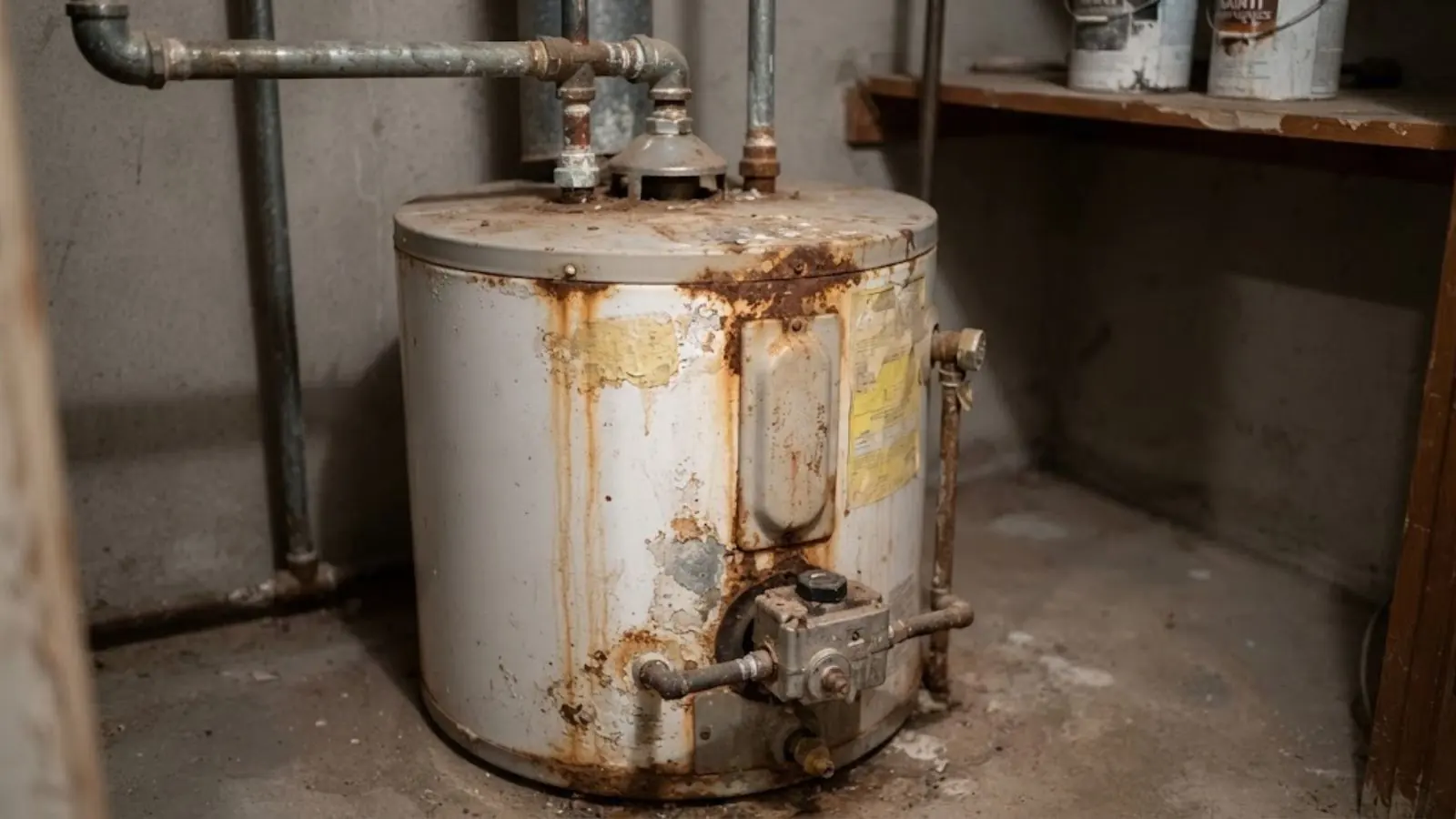
When a failed tank is an emergency
Water seeping from the shell, a puddle that returns after you wipe it up and rust colored water at the tank base are all signs of a failed tank. The longer it runs, the more floor and wall it can soak.
Many replacements can be done the same day we diagnose the failure, and the 24/7 line covers nights and holidays. Shut off the water, keep the area clear and tell us the tank size and fuel when you call.
What replacement day looks like
We shut off the water and the gas or power, drain the old tank and disconnect it. The new heater goes in the same place when it fits, and we replace the flex connectors, the relief valve piping and the shutoff valves that are past their age.
We check the venting on gas units, since a heater that backdrafts is a safety issue. Then we strap the tank, test the connections for leaks and light or power it up. You see the first hot water before we leave.
Signs a replacement beats another repair
A repair makes sense for a failed part. These signs say the tank itself is done:
- Water is seeping from the tank shell or from under the insulation.
- Rust colored hot water continues after the anode rod is changed.
- The heater has needed several repairs in a short stretch.
- The tank is old enough that parts are hard to find.
- Sediment makes loud popping that flushing does not cure.
- The household has outgrown the tank and runs out of hot water.
Choosing the new heater
The fuel and tank type decide the installation. Here is a quick guide to what we usually discuss with you.
| Option | Good fit | Watch for |
|---|---|---|
| Standard gas tank | A home with an existing gas line | Vent condition and gas line size. |
| Standard electric tank | A home with no gas service | Electric circuit capacity. |
| Heat pump (hybrid) tank | Garage or large utility space | Needs air volume and a condensate drain. |
| Tankless gas | Households that want endless hot water | Gas line and vent changes, see tankless water heaters. |
We confirm these details on site before quoting.
Strapping, permits and the paperwork buyers ask for
California Health and Safety Code section 19211 requires water heaters to be braced, anchored or strapped according to the California Plumbing Code, and sellers must certify it. We strap every replacement tank as part of the install.
A replacement often needs a plumbing permit. The Galt Building Division at 495 Industrial Drive, (209) 366-7200, can confirm what applies. We handle the steps that fall to the contractor and leave you with the inspection record.
What Galt's water means for your next heater
The City of Galt reports soft water, about 34 mg/L of hardness, from wells filtered at each site and then chlorinated. Soft water is easier on a tank than hard water, so a heater installed here that is kept up with an occasional flush can last toward the long end of its range.
That also means a water softener is not a purchase most Galt homes need to protect a new heater. If a salesperson says otherwise, see our honest note on softeners and filtration.
What the code requires of a replacement
A replacement follows the UPC based California Plumbing Code for relief valves, discharge piping, venting and clearances, along with the maker's installation instructions. Gas connections are leak tested before the burner is lit, and electric units are wired to the National Electrical Code (NEC).
What affects the price of a replacement
We quote the whole job before we remove the old tank.
- Size and type: A 40 gallon gas tank and a 50 gallon heat pump unit are very different jobs.
- Code updates: Strapping, relief piping, expansion tank and venting may need updating.
- Access: A garage floor install is quicker than a tight closet or an attic.
- Permit: We tell you if a permit applies and include the steps in the quote.
Insurance may cover water damage from a failed heater but rarely covers the heater itself. Keep the old tank until the adjuster has seen it or photographed it.
Water Heater Replacement questions
Yes. A failed tank is a night and weekend call for us, and many replacements are finished the same day. Close the supply valve above the heater and call the 24/7 line.
Often yes, when we carry or can fetch a matching unit and the existing connections are sound. Call and describe the heater, and we will tell you what is realistic.
A like for like swap is usually a few hours. A change of fuel type, a new vent or a move to tankless takes longer.
In many cases yes. The Galt Building Division issues plumbing permits and can confirm the rules for your property.
Yes. We remove and dispose of the old tank unless you want to keep it for an insurance adjuster.
It depends on your gas line, venting and how much hot water you use. We go through the numbers with you before you commit.