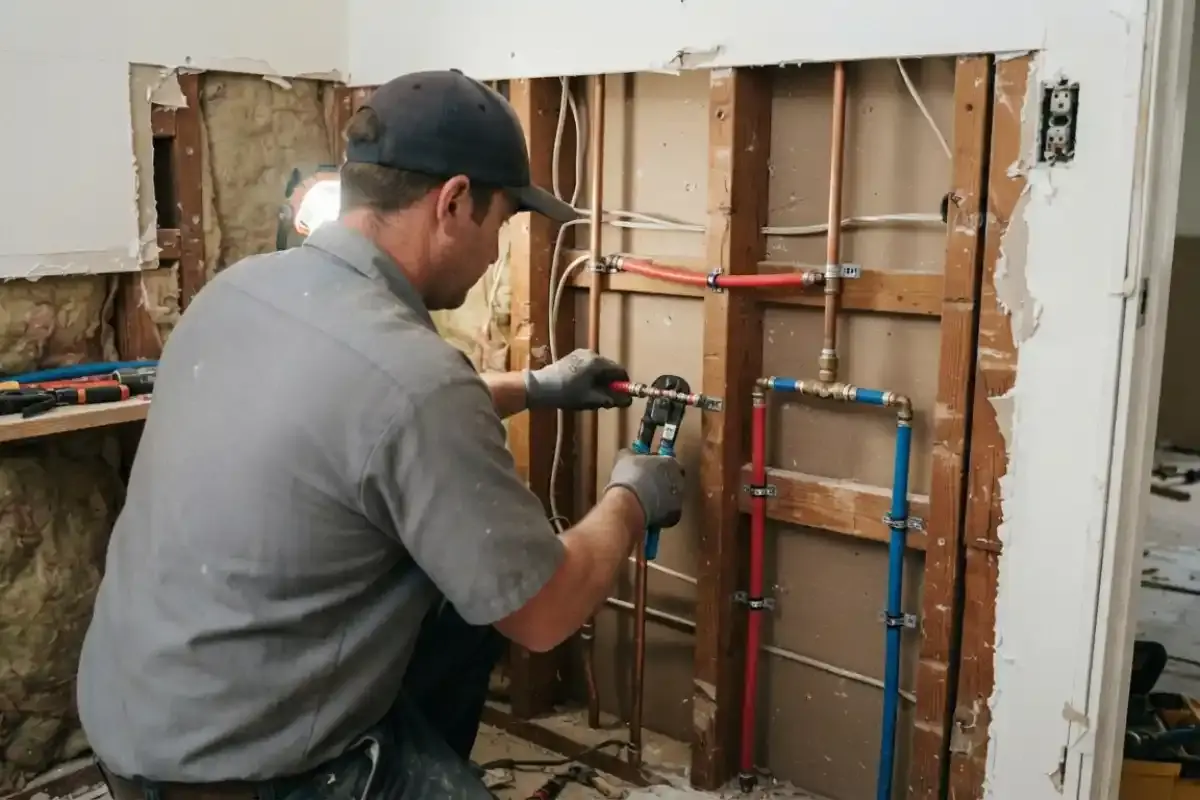
When repiping is the right call
A single leak does not justify replacing a house of pipe. A pattern does. Two or three pinholes in a year, rusty or low pressure water from galvanized steel, or a failing plastic such as polybutylene all point toward a replacement.
We look at the pipe, test the pressure and talk through the history. If a repair or a partial reroute will do, we tell you. We would rather quote the smaller job.
Pipe materials we install and replace
Both main options are reliable when installed properly. The better one depends on the house.
| Material | Strength | Watch for |
|---|---|---|
| PEX | Flexible, fast to install, good in freezing weather | Needs protection from sunlight and proper fittings. |
| Copper | Durable, long track record | Cost, and pinholes in aggressive water. |
| CPVC | Lower cost for supply lines | Can become brittle with age. |
Signs you may need repiping
Look for patterns, not single events:
- Repeated pinhole leaks in different spots.
- Rusty or brown water when you open a tap after a few hours.
- Falling pressure at every fixture.
- Galvanized steel pipe that is rusted at the fittings.
- A plastic pipe type that has a recall history, such as polybutylene.
- A buyer's inspection that flags the supply lines.
How a repipe goes
We plan it to keep disruption low.
Plan the route
We walk the house and mark the path for each line.
Permit
We handle the plumbing permit steps with the Building Division.
Replace
We install new lines and connect fixtures, usually in a day or two for an average home.
Test and patch
We pressure test, inspect and leave the wall openings ready for drywall repair.
What Galt's older homes tell us
Galt was founded in 1869, and the housing stock spans many building eras. Each era used different supply pipe, from galvanized steel to copper to plastics. That is why we identify the material before talking about price.
The City's soft water, around 34 mg/L, is gentle on pipe. A home with leaking pipes in Galt is often dealing with age, workmanship or pressure, not scale. We check the pressure at the start of every repipe.
What repiping week looks like
Water is shut off for part of each day while we cut in new lines, and we tell you in advance which hours. We open small sections of wall, run the new pipe, connect each fixture and restore water at the end of the day when we can.
A permit inspection follows the work. The inspector checks the new lines under pressure before the walls are closed. We schedule that visit and tell you when to expect it so you are not left guessing.
How to protect your belongings
Opening walls makes dust. A few steps keep it from spreading:
- Move furniture and wall hangings away from the walls we will open.
- Cover items that cannot be moved with sheeting, and keep rugs rolled up.
- Clear closets and cabinets that share a wall with a pipe route.
- Keep pets and children away from the work area and the tools.
- Photograph the walls before we begin so any repair can be matched to the original.
- Plan a place to stay for a night only if the house is very small and water is out for long stretches.
Pipe standards in a repipe
PEX tubing is made to ASTM F876 and used with fittings made to ASTM F877 or another listed standard. Copper and CPVC have their own ASTM standards. Drinking water pipe should carry an NSF/ANSI 61 mark, and the UPC based California Plumbing Code allows these materials for potable water.
What affects the price of repiping
We quote after seeing the layout.
- House size: Number of bathrooms and fixtures decides the footage.
- Access: A slab home with attic routing differs from a raised foundation with crawlspace access.
- Material: PEX and copper differ in cost.
- Restoration: Wall patching is a separate trade, and we plan the order with you.
Insurers generally treat repiping as maintenance. If a leak caused damage, that damage may be a covered loss, so ask your carrier.
Repiping questions
A typical house takes a day or two of plumbing work. Larger homes take longer.
Usually not. Water is off for part of each day. We plan around your schedule.
Both work well. PEX is faster to install and handles cold nights better. Copper has a long record and costs more.
We leave openings ready for patching and can point you toward trades who finish them.
Yes, repiping normally needs one. The Galt Building Division at (209) 366-7200 handles plumbing permits.
Yes. See Herald and Wilton. Related work includes water line repair.