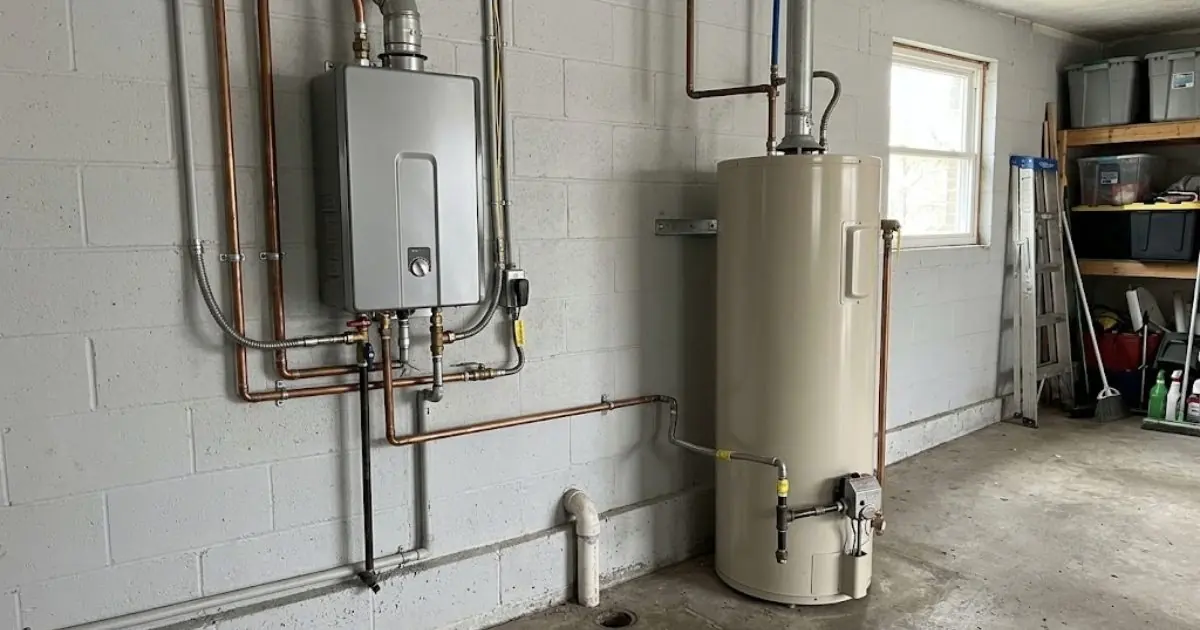
The two numbers that matter
Tankless sizing starts with flow rate in gallons per minute and temperature rise in degrees Fahrenheit. Flow is how much hot water you want at once. Rise is the gap between the cold water that enters the heater and the temperature you want at the tap.
BTU, the gas input rating, follows from those two. A heater must deliver enough heat to lift the flow through that rise.
Typical flow rates for fixtures
These are common figures, and your fixtures may differ. Check the labels.
| Fixture | Typical flow (gallons per minute) |
|---|---|
| Shower with a standard head | 2.0 to 2.5. |
| Kitchen faucet | 1.5 to 2.2. |
| Bathroom faucet | 0.5 to 1.5. |
| Dishwasher | 1.0 to 2.0. |
| Washing machine | 1.5 to 2.5. |
Add up the fixtures that may run at once to find the peak demand.
The formula
A gallon of water weighs about 8.34 pounds, and one BTU raises one pound of water by one degree Fahrenheit. So the heat needed per hour is flow in gallons per minute, times 60 minutes, times 8.34, times the temperature rise. Divide that by the heater's efficiency to get the input rating.
As a quick form: BTU per hour is about flow times 500 times rise, divided by efficiency. For example, 5 gallons per minute with a 60 degree rise at 0.92 efficiency needs about 163,000 BTU per hour. That is more than many tankless units provide, so a household with that demand may need to limit simultaneous use.
Sizing your own home
Run through these four steps with pencil and paper.
List the peak fixtures
Decide which fixtures might run together, such as two showers and a dishwasher.
Add the flows
Total the gallons per minute for those fixtures.
Find your rise
Subtract the winter incoming water temperature from the temperature you want, for example 120 degrees.
Apply the formula
Calculate the BTU and compare to unit ratings. Round up to the next model.
Winter incoming water in the Central Valley
Incoming water temperature is lower in winter. Incoming water temperature varies with the pipe run and the weather, so we do not publish a single figure. Size for the coldest month, not the summer average.
A heater sized for August may struggle in January. The practical fix is to ask a plumber to measure your cold water temperature in winter, or to size with a safety margin. Rural homes in Herald and Wilton on private wells can see colder water from deeper lines.
Gas line and vent checks
Large BTU ratings bring requirements that surprise many homeowners:
- The gas line may need a larger diameter for the run from the meter.
- The meter itself must supply enough volume for all appliances at once.
- The vent may need stainless steel or special plastic, and a different route.
- A condensing unit needs a condensate drain.
- A power outlet is needed for the fan and control board.
- The clearances around the unit must meet the manufacturer's instructions.
Worked example: two showers and a kitchen tap
Suppose two showers run at 2.5 gallons per minute each and the kitchen tap at 1.5, for a peak of 6.5. Say the water enters at 50 degrees and you want 110 at the tap, a rise of 60. The formula gives 6.5 times 500 times 60, which is 195,000, divided by an efficiency of 0.92.
That is about 212,000 BTU per hour, more than a single typical residential unit supplies. The answer is a larger unit, two units or a house rule that two showers do not run with the tap on. A plumber can walk through the numbers with you.
Common sizing mistakes
These errors cause most complaints:
- Sizing for summer incoming water instead of winter.
- Counting only one shower when two can run together.
- Ignoring the gas line, which limits what the unit can burn.
- Choosing a unit by its maximum rating without checking the flow at your rise.
- Forgetting that low flow fixtures may not trigger the heater.
- Skipping the vent check, since some vents cannot handle a larger unit.
Maintenance keeps the rating honest
A tankless heater only delivers its rated flow when it is clean. A clogged inlet filter screen or a scaled heat exchanger cuts flow and triggers error codes. Cleaning the screen is a simple job, and a flush removes scale.
Ask the installer how to reach the screen and how often to clean it. A unit sized correctly on paper can underperform if no one ever services it.
Standards behind the numbers
Gas tankless heaters are certified to ANSI Z21.10.3, and the label lists the maximum input in BTU per hour and the flow at a stated temperature rise. Use the manufacturer's flow charts alongside the formula, and follow the UPC based California Plumbing Code for gas and vent installation.
What to do before the install visit
A little preparation makes the sizing visit useful:
- Locate the gas meter and the gas line serving the old heater.
- List every fixture that may run at the same time.
- Photograph the old heater's data label and the vent.
- Measure cold water temperature on a cold morning if you can.
- Do not move or cap any gas line yourself.
- Ask the plumber to check carbon monoxide risk at the vent and the combustion air.
What a plumber adds
A site visit checks the gas line, the meter, the vent path and your actual fixtures. We also check the water pressure and the filter screen, since tankless units are sensitive to both. See our tankless water heater page for installation and repair.
Galt's soft water, about 34 mg/L of hardness, helps by slowing scale in the heat exchanger. Annual maintenance is still wise.
Local questions
It depends on your flow and winter temperature rise. A typical family home may need 150,000 to 199,000 BTU per hour, and we calculate it for you.
Yes, if it is sized for the combined flow. Many units can run two at once and not three.
Often. A tankless unit draws more gas than a tank heater, and the line may need upsizing.
It depends on the home. The soft water helps, and the gas line and vent are the main questions.
Yes. Call and we will visit and calculate.