What a proper installation includes
A good install begins before the tank arrives. We confirm the fuel, the available space, the vent path, the water and gas connections and the electric circuit. We check the clearance rules for a closet or a garage and note anything that needs correcting.
On the day we connect the water, gas or power, the relief valve and its discharge pipe, an expansion tank where one is needed, and the drain pan if the heater sits above living space. We test every connection and start the unit.
From call to hot water
The sequence is simple and the paperwork is part of it.
Assess
We look at the space, fuel, vent, and the daily hot water load of your household.
Quote
We give you a price in writing before we order or carry the unit.
Install
We set the tank, connect it, strap it and check the vent and gas for leaks.
Close out
We schedule any required inspection and show you the shutoff, the relief valve and the temperature setting.
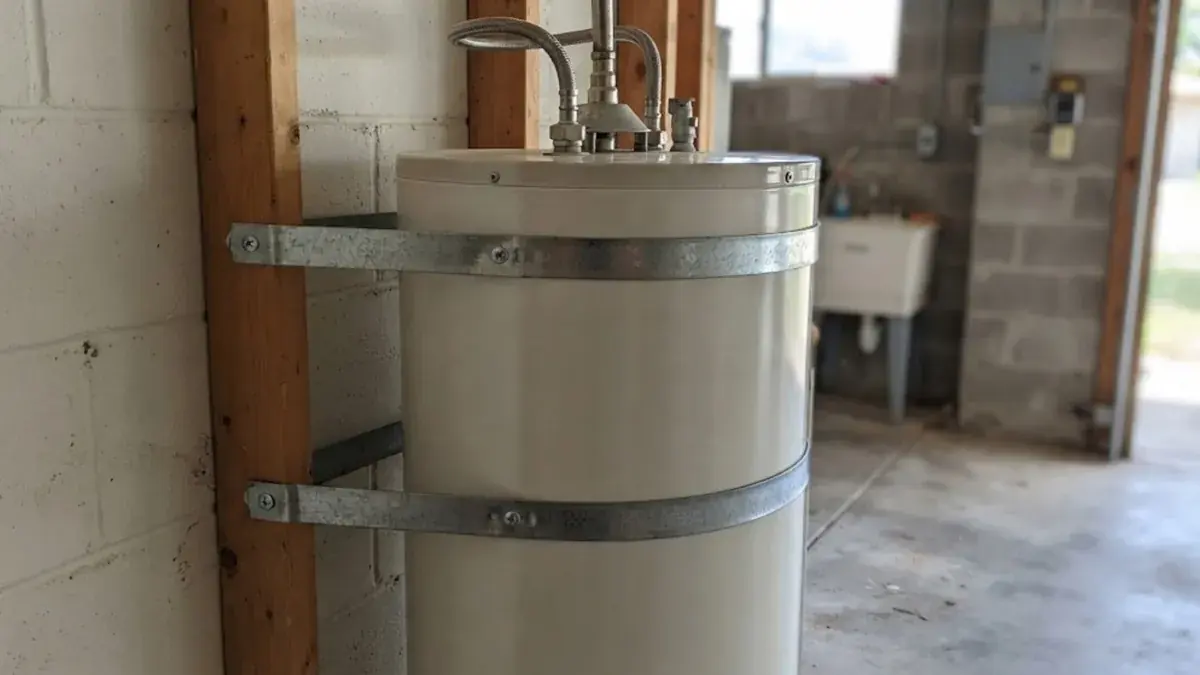
California strapping and why it is not optional
Health and Safety Code section 19211 requires new, replacement and existing residential water heaters to be braced, anchored or strapped as set out in the California Plumbing Code. Sellers have to certify that the heater complies.
The straps keep a full tank from tipping, which protects the gas line and the wall. We include strapping on every install and photograph it for your records.
Questions we settle before we install
These decisions change the cost and the result:
- Gas, electric, heat pump or tankless, and whether the home can support it.
- Tank size for the number of people and the bathrooms in the home.
- Whether the heater sits in a garage, a closet or an attic, which affects pan and drain needs.
- Vent type and path, and whether an old vent is safe to reuse.
- Whether an expansion tank is needed on a closed plumbing system.
- Whether a plumbing permit applies. The Galt Building Division at (209) 366-7200 can say.
Garage installs and Galt weather
Many Galt homes keep the heater in the garage, which suits a standard tank and a heat pump unit. Central Valley summers run hot, so a heat pump heater in a garage has warm air to work with for much of the year, and in winter the garage is still above freezing most nights.
That is a reason to ask about a hybrid unit if you want lower running cost. The trade off is a higher purchase price and the need for air space and a condensate drain, which we check on the site visit.
Installation rules in plain terms
Installation rules come from three places: the manufacturer's instructions, the California Plumbing Code (based on the UPC) and, for any electrical connection, the National Electrical Code (NEC). We follow all three and note anything that needs a permit.
What affects the price of an installation
We quote the entire job and explain each line.
- Unit type: Tankless and heat pump models cost more than a standard tank.
- Existing set up: Reusing a sound vent and gas line is cheaper than replacing them.
- Code items: Strapping, pan, relief piping and expansion tank are priced as part of the job.
- Permit: When a permit applies, the steps are part of the quote.
Many insurers will not pay for a planned upgrade. If a failed heater has damaged the house, that damage may be covered, so ask your carrier before the old unit leaves.
Water Heater Installation questions
It depends on the unit, the fuel and the set up. We give a firm price after a site look, and we explain each line so you can compare it with another quote.
We can discuss it on the call. Warranty and fit questions are easier when we supply the unit, and we will be straightforward about what we can stand behind.
Often yes. Contact the Galt Building Division at (209) 366-7200 or ask us and we will tell you what we know applies.
A standard tank swap takes a few hours. Moving to tankless or changing fuel can take most of a day.
Emergency replacements run on the 24/7 line. A planned install is scheduled in daytime hours that suit you.