What the law says
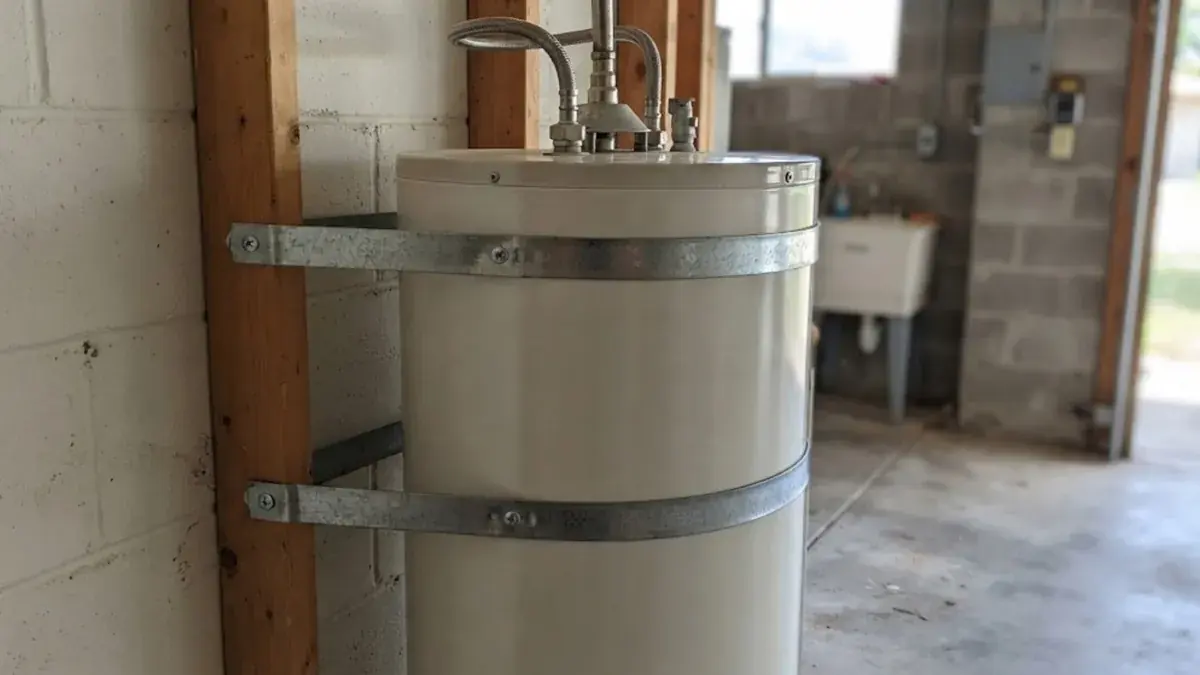
California Health and Safety Code section 19211 requires new, replacement and existing residential water heaters to be braced, anchored or strapped to resist falling or horizontal displacement due to earthquake motions. The method must follow the California Plumbing Code.
The law also puts a duty on sellers. A seller of residential property must certify that the water heater is braced, anchored or strapped in compliance, and the disclosure goes into the sale paperwork.
What good strapping looks like
Inspectors and plumbers look for these points:
- Two straps around the tank, one in the upper third and one in the lower third, with the lower strap at least a few inches above the controls.
- Straps anchored into wall studs or masonry with lag screws or masonry anchors, not drywall alone.
- Straps that are snug and do not allow the tank to rock.
- A flexible gas connector and flexible water connectors that tolerate movement.
- A tank that sits on a level, stable base.
- Clearances kept for the vent and the controls.
How to add straps
A plumber does this in a short visit. A handy owner can too.
Find the studs
Locate two studs behind the heater with a stud finder.
Mark the strap height
Mark the upper and lower strap lines, keeping the lower strap above the control.
Install anchors and straps
Attach the strap kit with lag screws into the studs and wrap the tank.
Tighten and test
Tighten until the tank does not shift, and check that the flexible connectors have some slack.
Why it matters for gas heaters
A tank that tips can pull the gas connector loose or break the water line. Gas heaters add the risk of a gas leak and a fire. That is the reason the law exists, and the reason we strap every gas heater we touch.
If your heater is older, check the label for the date and consider replacing it when the tank is near the end of its life. See water heater replacement.
Sellers in Galt, Herald and Wilton
Homes in Galt change hands often, and the water heater is a common item on inspection reports. If you sell, the certification goes with your disclosure, and a buyer's inspector will look at the straps.
The practical effect is that unstrapped heaters become a negotiation point. For a few dollars of strap kit and a short visit you can remove the issue. The same rule applies in Herald and Wilton, and heaters in garages and barns are covered by it when the building is a residence.
Straps and permits
Strapping alone is usually part of a larger job.
| Job | Strapping needed? | Permit? |
|---|---|---|
| Add straps to an existing heater | Yes | Usually no, ask the Building Division. |
| Replace a heater | Yes | Often yes, see below. |
| Install a new heater | Yes | Yes, normally. |
| Selling a home | Yes, certify | Not for the certification itself. |
The Galt Building Division at (209) 366-7200 can confirm permit rules.
Mistakes inspectors flag
Buyers' inspectors see the same issues again and again:
- Straps that are loose or anchored into drywall instead of studs.
- A single strap instead of two.
- A strap placed too low, over the controls.
- Rigid gas or water pipes without flexible connectors.
- A heater that rocks on an uneven base.
- A missing or blocked relief valve discharge pipe.
Heaters in closets and attics
A heater in a closet is usually easy to strap, since studs are near. A heater in an attic is harder, because a full tank is heavy and the platform must be strong. A platform that is not secured can slide, and the straps will not help if the platform moves.
If your heater is in an attic or on a raised platform, ask a plumber to check both the straps and the platform. The fix may be a bracket, a new platform or moving the heater.
Records worth keeping
Keep a photo of the straps, the date of installation and the invoice if a plumber did the work. A permit sign off, if one applied, belongs in the same folder. These records speed up a sale and help with an insurance question.
If you buy a home, ask the seller for the certification and look at the straps yourself. A short check at the walkthrough can save an argument after closing.
Where the rule comes from
The requirement sits in Health and Safety Code section 19211 and points to the California Plumbing Code for methods. California's Division of the State Architect has also published bracing guidelines for residential water heaters.
What to do if your heater is not strapped
Fixing it is a short job:
- Buy a strap kit rated for your tank size, or ask a plumber to supply one.
- Do not strap over the controls or the relief valve.
- Have the flexible gas and water connectors checked at the same time.
- Take a dated photo of the finished straps for your records.
- Do not rely on the straps alone if the heater sits on a loose platform.
- Call a plumber if the heater is leaking, rusted or old, since replacement may make more sense.
Who can strap a heater
A plumber can strap a heater as part of any visit. A handy homeowner can follow the kit instructions, though a loose strap or a poor anchor gives a false sense of safety. If you have any doubt, ask for a plumber to check it.
Some hardware stores sell kits that meet the code. We install them on every replacement and photograph the work. See water heater installation for a full scope.
Local questions
The code section covers new, replacement and existing residential water heaters. Check the text of the section or ask a plumber.
A kit is modest, and installation is often quick. We include it on installs and quote it for existing heaters.
A wall mounted tankless heater is anchored by its bracket. Ask a plumber about the mounting rules.
Usually not. Confirm with the Building Division.
Yes. We include it with every install and offer it as a standalone visit.