Why gas water heaters need more than a swap
A gas water heater burns fuel, so it needs a gas supply, a vent to carry exhaust out and enough air to burn cleanly. If any piece is wrong, the heater can leak carbon monoxide into the house. That is why the install is more than plugging in a new tank.
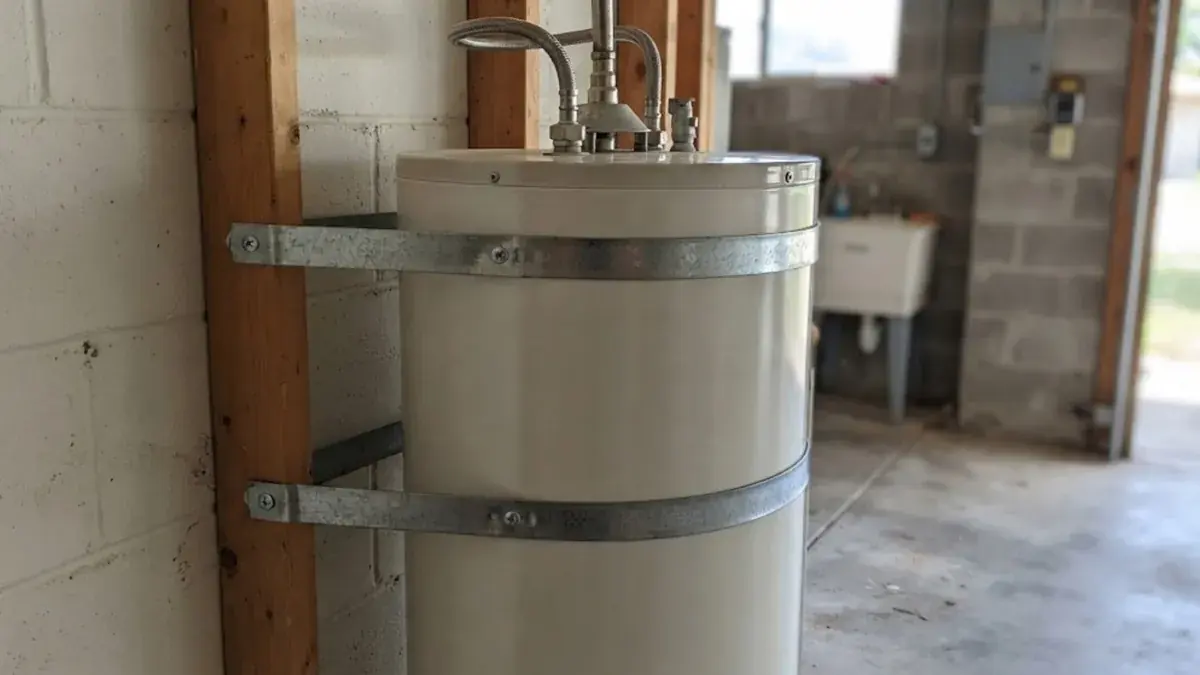
A plumber checks the gas line size, the shutoff, the connector, the venting and the clearances. We also check that the heater is strapped, since California requires it.
What a proper installation includes
Use this as a checklist when you compare quotes:
- A new gas shutoff and a flexible gas connector rated for the appliance.
- A leak test of every gas joint with a leak solution or a meter.
- A vent that slopes up, is sealed at joints and ends where the code allows.
- A temperature and pressure relief valve with a discharge pipe that runs to a safe place.
- An expansion tank if the plumbing is a closed system.
- Strapping at two points on the tank, and a drain pan where needed.
Strapping and the law in California
California Health and Safety Code section 19211 requires new, replacement and existing residential water heaters to be braced, anchored or strapped as the California Plumbing Code requires. Sellers must certify it. We include strapping on every install.
A tank that tips in an earthquake can tear the gas line and start a fire. Straps are cheap protection, and a buyer's inspector will look for them.
How the day goes
A gas heater swap is usually done in a few hours.
Shut off and drain
We turn off the gas and water and drain the old tank.
Remove the old unit
We disconnect the vent, gas and water lines and take the tank out.
Set and connect
We set the new tank, connect water, gas and the vent and fit the relief valve.
Test and light
We check for gas leaks, fill the tank, light the burner and check the draft.
Galt installs, permits and Building Division advice
Water heater replacement often needs a permit. The Galt Building Division at 495 Industrial Drive, (209) 366-7200, issues plumbing permits, and the City's web page does not list water heaters by name, so ask them directly what applies to your property.
Many Galt homes keep the heater in a garage. The practical risks there are vehicle impact and flammable vapors from gasoline cans, so a heater in a garage should have the burner raised off the floor, which many modern units do by design. Homes in Herald and Wilton may run on propane, which changes the unit and the gas connections.
Gas versus electric
The fuel you have usually decides, but it is worth comparing.
| Question | Gas tank | Electric tank |
|---|---|---|
| Recovery speed | Faster | Slower. |
| Needs a vent | Yes | No. |
| Needs a gas line | Yes | No. |
| Upfront cost | Moderate | Often lower. |
| Safety checks | More, including combustion air | Fewer. |
For full replacement steps, see water heater replacement.
Combustion air and venting
A gas heater needs air to burn. In a small closet with a door, the heater may need vents for combustion air at the top and the bottom. In a garage the air supply is usually fine, though stored paint and fuel can be a hazard.
The vent carries exhaust to the outside. It must slope up, stay sealed at joints and end at the right height. A heater whose vent is loose or blocked can push carbon monoxide into the house.
Carbon monoxide alarms
Any home with a gas appliance should have working carbon monoxide alarms near sleeping areas. Test them monthly and replace them as the maker advises. An alarm will not fix a vent problem, but it can warn you in time.
If an alarm sounds, get everyone outside and call 911. After that, call us to inspect the heater and the vent.
Why age matters
Gas tank heaters have a service life that is limited by the tank steel. As a heater ages, the anode rod is used up and rust begins to attack the tank. A heater near the end of its life can fail suddenly and flood the area.
If your heater is old, plan its replacement before it fails. A planned replacement is cheaper and calmer than a midnight emergency, and you can pick the unit instead of taking whatever is on the truck.
Standards a gas heater is built to
Gas storage water heaters are certified to ANSI Z21.10.1, and installation follows the maker's instructions and the UPC based California Plumbing Code. Those rules cover the vent, the gas connection, clearances and the relief valve.
What to do if you smell gas
A gas smell is an emergency. Follow these steps in order:
- Leave the house at once with everyone inside, including pets.
- Do not switch lights or appliances on or off, and do not use a phone inside.
- Call 911 and the gas utility from a safe distance outside.
- Do not go back in until emergency crews say it is safe.
- Have a plumber check the heater, the connector and the vent before it is used again.
- Never relight a pilot when you can smell gas.
Questions to ask any installer
Ask whether the quote includes venting, strapping, the relief valve discharge pipe, a gas leak test and permit handling. Ask whether the old tank is hauled away and who is responsible if the inspection requires changes.
A quote that lists these items is easier to compare. A quote that says only "install water heater" leaves out the parts that matter most.
Local questions
It is risky. Gas connections and venting need training and a leak test. We recommend a licensed plumber, and some jurisdictions require a permit.
Many last roughly a decade or more, depending on use and maintenance. Flushing and checking the anode rod help.
It depends on the household. A common range is 40 to 50 gallons for a family of four. We size it by your use.
Often yes in a house with gas service, though rates change. We can discuss it on a visit.
Yes, for failed tanks. See water heater installation for planned work.